

Heavy rain every day unit Christmas is needed to replenish the near empty reservoir which supplies water to Wellington, according to climate expert Simon Ratsey.
His warning came as thousands of delegates arrived in Turkey for the COP31 climate summit.
Wellington Climate Cafe joined groups worldwide to send a crisis letter to COP31, urging world leaders to find common ground on reducing emissions.
Spokesperson Stephen Tate said: “Our message is simple: Please don’t come away empty-handed.”
Here is the climate cafe’s summary of our local reservoirs…
Clatworthy Reservoir
Wellington residents receive much of their water from Clatworthy Reservoir in the Brendon Hills.
According to an Environment Agency assessment published in late October, the water storage level at Clatworthy was “exceptionally low” at 25 per cent of capacity.
Mr Ratsey estimated that the reservoir built in 1958 would only be about 50 per cent full by the end of the year.
“The amounts of extra rainfall that the Environment Agency says we need are statistically not very probable.
“In a nutshell, it needs to rain heavily every day for the next two months if there’s to be any chance of the reservoir refilling by the end of the year.
“It’s hard to believe that four years ago, Clatworthy was overflowing after the wettest November on record in 2022.”.
Wimbleball Reservoir
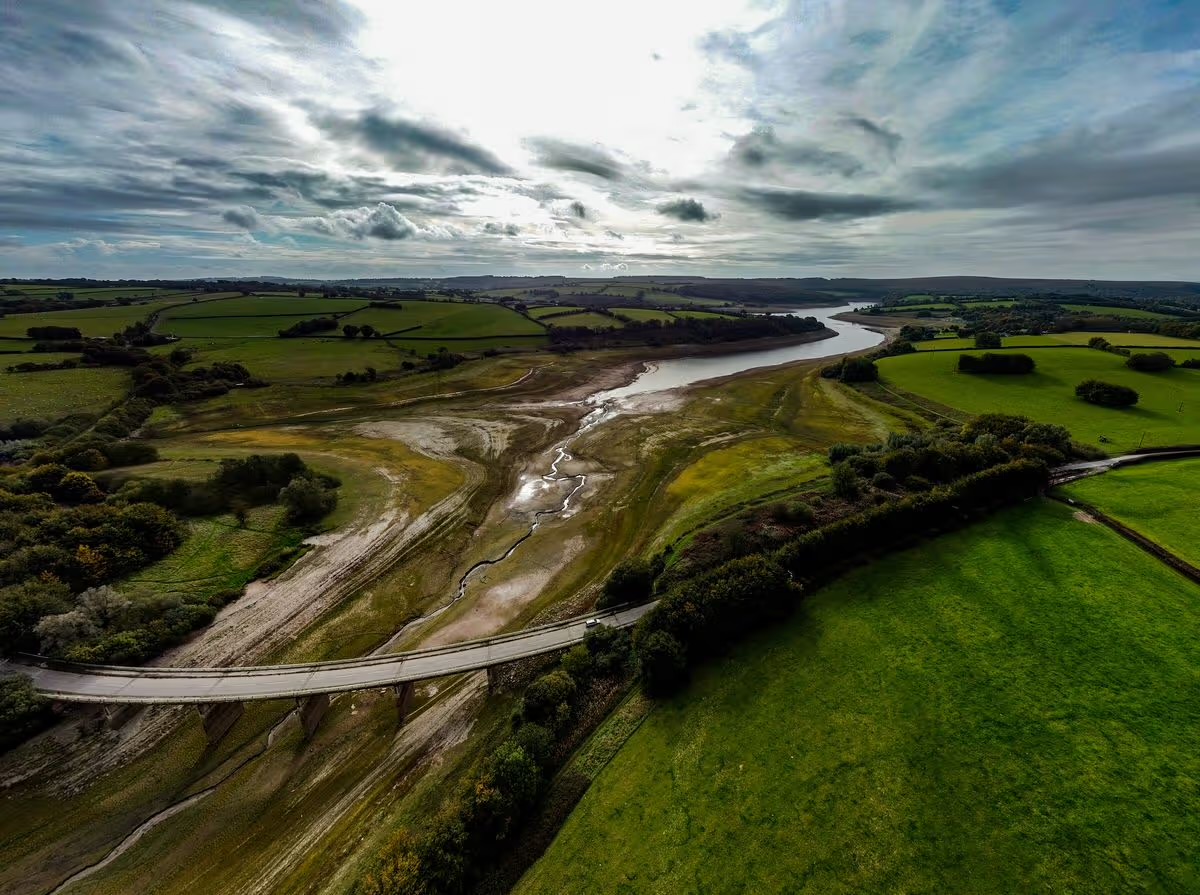
Wimbleball Reservoir in Exmoor National Park supplies water to Exeter and East Devon and is currently at 17 per cent of its capacity.
Mr Ratsey said Wimbleball, which was completed in 1979, had the capacity to hold four times as much water as Clatworthy but its catchment area was 40 per cent smaller.
“Since the water level at Wimbleball is lower than Clatworthy, it will take that much longer to refill,” he added.
Freelance photographer Paul Scullion, from Taunton, took a series of alarming photographs of Wimbleball Reservoir in October (main photo above).
“I’d heard the water levels were low but what I saw was pretty shocking,” he said.
Hawridge Reservoir
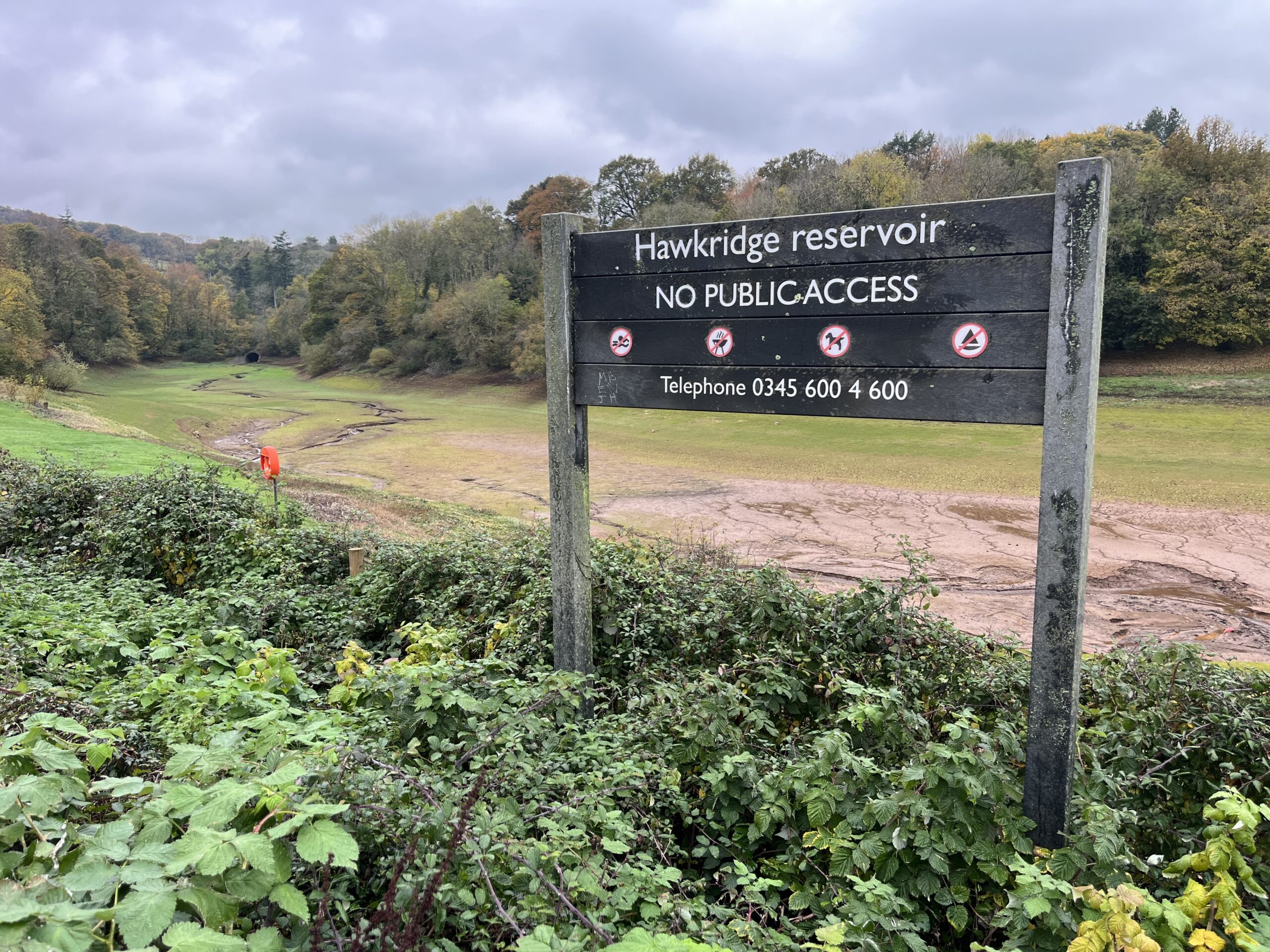
Stephen Tate, of Wellington Climate Cafe, visited the reservoir in early November and found it nearly empty.
“It had become a familiar landmark from many visits to the Quantocks over the past 20 years, I remember a beautiful lake. Now it’s a giant puddle,” he said.
Hawkridge Reservoir in the Quantocks was built in the early 1960s to supply drinking water to Bridgwater.
In the past, Wessex Water let anglers fish for brown and rainbow trout at the 32-acre site.
Durleigh Reservoir
It is a similar story at Durleigh Reservoir, the main water supply for Bridgwater residents, which is currently at 34.4 per cent of capacity.
Summary
The long-term trend for these four reservoirs has been downward due to increasing demand and extreme heat events, with water levels 20 per cent lower than in 2021.
Mr Ratsey said: “Big increases in demand for water since the reservoirs were built mean that it is rarely possible to hold back supplies in reserve so most years, water levels drop significantly earlier and more rapidly than used to be normal.”
Despite 2026 being the hottest summer on record, Wessex Water said in August that it had no plans to increase Clatworthy’s capacity. The privatised water company currently has a hosepipe ban in place for the whole region, the first imposed since 1976.
Mr Ratsey added: “I do not expect the current hosepipe ban to be lifted any time soon.”
Wellington Climate Cafe
The cafe meets on the second Thursday of the month at Wellington Meeting House, High Street, Wellington TA21 8RA, from 7pm-9pm.
For more information, contact: climatecafe@posteo.uk