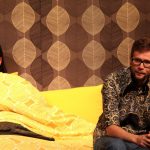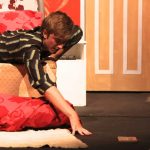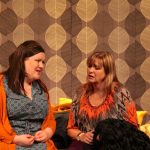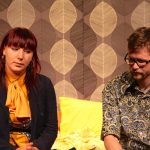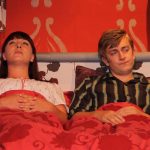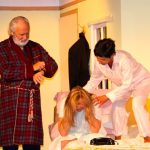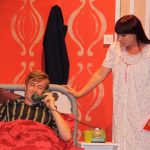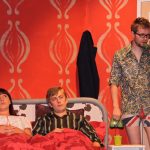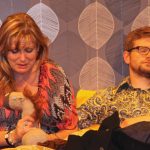


Alan Ayckbourn’s play ‘Bedroom Farce’ is exactly that – a farce that takes place in bedrooms. During the course of one night and early the following morning, one couple’s flawed marriage and their individual insecurities bring mayhem and comic confusion to three other supposedly happy, secure, middle-class relationships, revealing each one to be full of underlying tensions, secrets, unspoken resentments and irritations. Ayckbourn’s acutely observed and ingenious script is both funny and knowing – and that is why, despite being written nearly 40 years ago, audiences still relate to and enjoy the disquieting truths it explores.
The underlying implication is that the bedroom is actually a battleground rather than a place of loving intimacy (and a place to sleep), hence the settings of three couples’ separate bedrooms presented on stage simultaneously. We are taken from one to another in two tightly structured acts and observe what takes place when their apparent calm is disturbed by the rampaging fourth couple, Trevor and Susannah, both restless, self-centred neurotics who manage to cause chaos wherever they land. Even Trevor’s parents – Delia and Earnest – have their settled, mundane marital routines thrown into farcical disarray when their daughter-in-law, Susannah, arrives in the middle of the night.
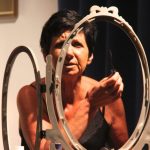
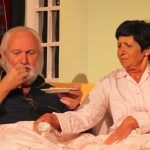
Civic Players’ production of the play begins its run this week at Wellington Arts Centre. As Delia and Ernest, Mary Lewis and John Hayhurst are delightful. This couple represent a contrast in generational attitudes to marriage, one in which eating toasted pilchards in bed as a wedding anniversary treat is a genuine expression of intimacy. Mary Lewis brings all her comic gifts to the role, tart and testy about her husband’s and daughter-in-law’s foibles and conveying the role’s hot water bottle and housecoat common sense. She gets the play’s best line: ‘My mother used to say, Delia, if S-E-X ever rears its ugly head, close your eyes before you see the rest of it.”
John Hayhurst is a genial Capt. Bird’s Eye as Ernest, a man of stoical good-humour, preoccupied with his errant guttering and leaking roof and totally flummoxed by the mayhem visited on him when Susannah’s frenetic arrival expels him from his own bedroom.
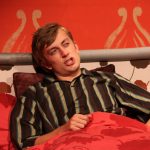
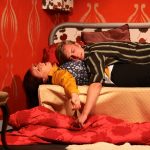
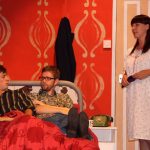
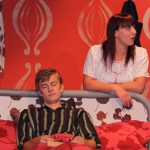
Reece Baker, in the role of bedridden Nick, has the enviable task of remaining virtually immobile throughout the play. He does, though, make the most of the role’s pained self-pity – and physical pain too – as his own plight is apparently considered secondary to his wife’s and others’ needs. Bethany Swan’s Jan is credible as the most understated character in the play, her ‘normality’ and resigned imperturbability making an effective contrast to the exaggerated daftness of all the rest. In her brief moment with former lover Trevor, she represents Jan as the long-suffering partner of a succession of useless, immature men – but kisses him anyway, forgiving him, as she does her own husband, for being an idiot.
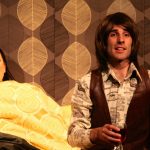
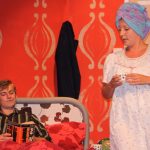
As newly weds Malcolm and Kate, Richard Matravers and Christina Green are genuinely funny as a couple for whom playfulness and practical jokes with shaving foam and hidden shoes have yet to become irksome. Richard Matravers is at his very best in this role. His George Harrison wig and velvet flares give him exactly the right period look which he complements with the exaggerations of vocal tone and body language needed in farce. Christina Green is delightful, physically comfortable even buried in bed under a mountain of coats. They have the play’s most farcical moment to share when a wonderfully incompetent piece of DIY falls apart – in their bedroom of course.
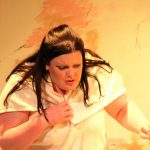
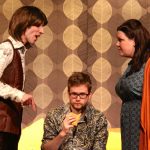
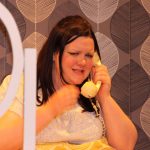
As the marauding, self-destructive couple, Trevor and Susannah, Adam Sherman and Charlie Hughes communicate the essential neurotic self-absorption and total obliviousness to the havok they wreak in their visits to others’ bedrooms. Their performances lead us to understand that they genuinely deserve each other in their reconciliation as the other three couples pick through the wreckage, both physical and emotional, they have left behind.
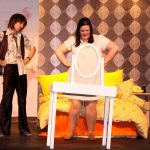
Director Graham Hart has a talented cast at his disposal and is supported by some spot-on 1970’s costuming by Penny Bradnum. The set gives the audience the right clues to the status of each marriage in terms of decor and somehow shoehorns three distinct bedrooms onto a very small stage. The bedrooms are the key, where everything – bickering, eating, drinking, confessing, DIY – everything except sex and sleeping – happen. All that is needed for the run to be a success is injections of both pace and vibrancy that come from having audience prepared to enjoy Ayckbourn’s delightful, witty script and recognise the human flaws he exposes.