

Can you imagine over a thousand extra residents in Whiteball? it happened. If you’ve ever travelled the rail route between London and Exeter your popping ears may have told you that just outside Wellington, the train travels through a tunnel nearly a mile long. But you may be unaware that the tunnel is nearly 160 years old and was one of Isambard Kingdom Brunel’s projects.
When completed, it allowed the Bristol to Exeter railway line to become ‘probably the fastest stretch of railway in the world’. Yet beyond the world of historians and railway enthusiasts, the tunnel is currently just a brief dark interlude that disrupts passengers who are reading.
Now, the story of the building of this tunnel, the Whiteball Tunnel at Sampford Arundel, is the starting point of an exciting and ambitious community drama project. Historians Richard Fox and John Burgess have joined forces with Actiontrack Performance Company Director, Nick Brace, to set the project in motion in time to mark the 110th anniversary next year of a world land speed record on the line set by the GWR locomotive City of Truro in 1904. The record rested on Brunel’s determination to build an arrow-straight route through Whiteball Hill, thereby linking Exeter and Plymouth with Bristol and London.
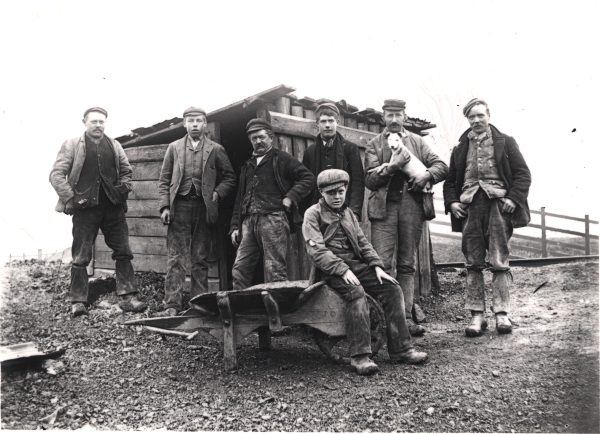
You might be forgiven for imagining the relevant history to be simply about engineering, locomotives and brickwork but, in reality, the building of the tunnel is essentially a human story. In 1841 over one thousand navvies were drafted in to excavate the tunnel, housed in makeshift huts on Whiteball Hill where they lived for three years. The narratives that have survived in local records involve crimes, injuries, one death, fights in Taunton, ‘broomstick marriages’ – in which navvies formed unofficial liaisons with women who were not their wives – and feats of quite exceptional strength and endurance, often in appalling weather, to dig and line the tunnel itself. Just imagine – all 1092 yards of the tunnel were excavated by hand, through sand which had to be carried away by horse and cart. As Richard Fox says on the website devoted to the tunnel and its human history (www.sampfordarundel.org.uk), “How long would it take you to shovel 20 tones of sand over a six foot wall?” If you were a navvy the answer would be, “A day!” And they were expected to shift the same amount every day.” One detail still surviving is the place locals know as ‘Tommy Shop’, referring to the site of the shop where the tokens given to navvies as wages could be spent. Significantly, the shop was owned by the contractors who hired – and paid – the navvies.
Actiontrack Performance Company, based at Taunton’s Brewhouse Theatre, aims to discover stories and bring them to life. This project will involve schools – Sampford Arundel Primary and Court Fields schools are already involved – and members of the local community as well as historians from Somerset and Devon. It is hoped it will lead to an outdoor spectacle – in Nick’s words, “a creative interpretation of history” – as well as leaving a lasting legacy – a Heritage Trail, perhaps, beginning near the tunnel entrance and following its route and, maybe, even a phone app that makes the location come to life.
It may be that as a result of the project, far from being just a tunnel along a railway line, Whiteball becomes known locally as a place where not only an impressive engineering feat was accomplished but also some fascinating human stories were played out and rediscovered.
Normal
0
false
false
false
EN-GB
X-NONE
X-NONE
If you’ve ever travelled the rail route between London and Exeter you may have noted that, on the Devon/Somerset border, the train travels through a tunnel nearly a mile long. But you may be unaware that the tunnel is nearly 160 years old and was one of Isambard Kingdom Brunel’s projects which, when it was completed, allowed the Bristol to Exeter railway line to become ‘probably the fastest stretch of railway in the world’. Beyond the world of historians and railway enthusiasts, the tunnel is just that, no more.
Now, the story of the building of this tunnel, the Whiteball Tunnel at Sampford Arundel, is the starting point of an exciting and ambitious project launched this week at the Beambridge Inn. Historians Richard Fox and John Burgess have joined forces with Actiontrack Performance Company Director, Nick Brace, to set the project in motion in time to mark the 110th anniversary next year of a world land speed record on the line set by the GWR locomotive City of Truro in 1904. This record would not have been possible without Brunel’s determination to build an arrow-straight route through Whiteball Hill, thereby linking Exeter and Plymouth with Bristol and London.
You might be forgiven for imagining the relevant history to be simply about engineering, locomotives and brickwork but, in reality, the building of the tunnel is essentially a human story. In 1841 over one thousand navvies were drafted in to excavate the tunnel, housed in makeshift huts on Whiteball Hill where they lived for three years. The narratives that have survived in local records involve crimes, injuries, one death, fights in Taunton, ‘broomstick marriages’ – in which navvies formed unofficial liaisons with women who were not their wives – and feats of quite exceptional strength and endurance, often in appalling weather, to dig and line the tunnel itself. Just imagine – all 1092 yards of the tunnel were excavated by hand, through sand which had to be carried away by horse and cart. As Richard Fox says on the website devoted to the tunnel and its human history (www.sampfordarundel.org.uk), “How long would it take you to shovel 20 tones of sand over a six foot wall?” If you were a navvy the answer would be, “A day!” And they were expected to shift the same amount every day.” One detail still surviving is the place locals know as ‘Tommy Shop’, referring to the site of the shop where the tokens given to navvies as wages could be spent. Significantly, the shop was owned by the contractors who hired – and paid – the navvies.
Actiontrack Performance Company, based at Taunton’s Brewhouse Theatre, aims to discover stories and bring them to life. This project will involve schools – Sampford Arundel Primary and Court Fields schools are already involved – and members of the local community as well as historians from Somerset and Devon. It is hoped it will lead to an outdoor spectacle – in Nick’s words, “a creative interpretation of history” – as well as leaving a lasting legacy – a Heritage Trail, perhaps, beginning near the tunnel entrance and following its route and, maybe, even a phone app that makes the location come to life.
It may be that as a result of the project, far from being just a tunnel along a railway line, Whiteball becomes known locally as a place where not only an impressive engineering feat was accomplished but also some fascinating human stories were played out and rediscovered.
/* Style Definitions */
table.MsoNormalTable
{mso-style-name:”Table Normal”;
mso-tstyle-rowband-size:0;
mso-tstyle-colband-size:0;
mso-style-noshow:yes;
mso-style-priority:99;
mso-style-parent:””;
mso-padding-alt:0cm 5.4pt 0cm 5.4pt;
mso-para-margin-top:0cm;
mso-para-margin-right:0cm;
mso-para-margin-bottom:10.0pt;
mso-para-margin-left:0cm;
line-height:115%;
mso-pagination:widow-orphan;
text-autospace:ideograph-other;
font-size:11.0pt;
font-family:”Calibri”,”sans-serif”;
mso-fareast-language:EN-US;}