

Patients at Musgrove Park Hospital are benefiting from a pioneering new leadless pacemaker which offers greater freedom, fewer restrictions and a lower risk of complications than traditional devices.
Musgrove has become the first non-cardiothoracic surgical centre to implant the AVEIR leadless pacemaker, enabling selected patients to receive the innovative treatment closer to home rather than being referred elsewhere.
Unlike conventional pacemakers, which are implanted in the chest and connected to the heart by wires known as leads, the new device sits directly inside the heart and does not require any wires.
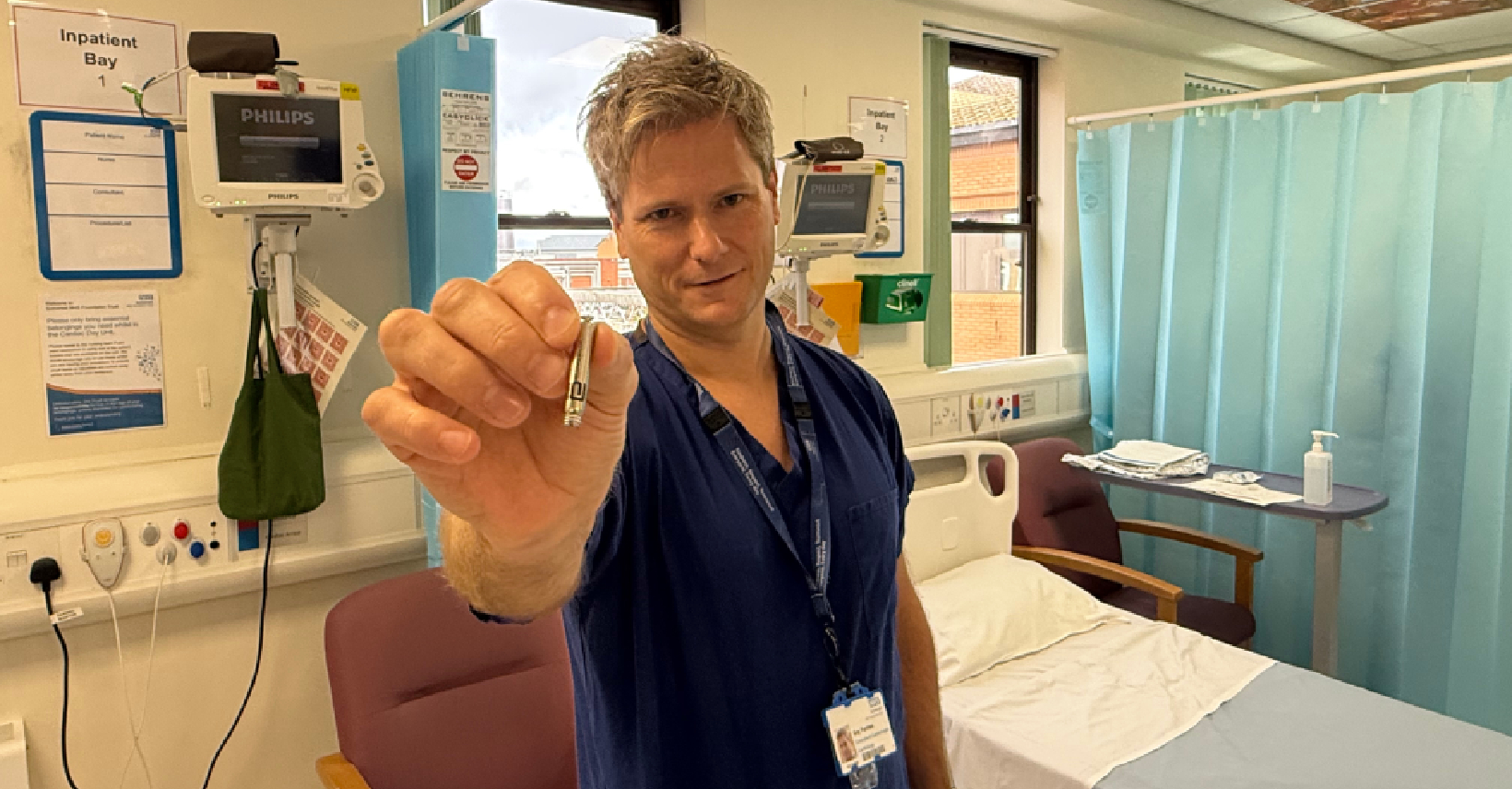
Dr Guy Furniss, a consultant cardiologist at Somerset NHS Foundation Trust, said the development represents a significant step forward for carefully selected patients.
“The vast majority of pacemakers are implanted in the chest and then connected to the heart by a wire.
“The challenge is that these wires move every time the heart beats and, over many years, they can become a point of failure.
“Many of our patients will have a pacemaker for decades, and traditional pacemakers also require battery replacement procedures throughout a patient’s lifetime, with every intervention carrying a small risk of infection.
“Leadless pacemakers sit entirely within the heart and remove the need for these wires altogether, which is one of their biggest advantages.”
The hospital has already implanted the device in two patients in their 40s, both of whom were discharged home the following day without complications.
While not suitable for everyone, the technology offers an important option for patients who meet specific clinical criteria, particularly younger people who are expected to need pacing support for many years.
Dr Furniss added: “A lot of patients will still be better served by a conventional pacemaker and other cardiac devices, so this is not a replacement for existing treatments.
“However, for selected patients, particularly younger people who may not require a great deal of pacing, this device can be a very attractive option. In some cases, it could potentially last for around 25 years.”
ABOVE: Dr Guy Furniss – consultant cardiologist at Somerset NHS Foundation Trust.
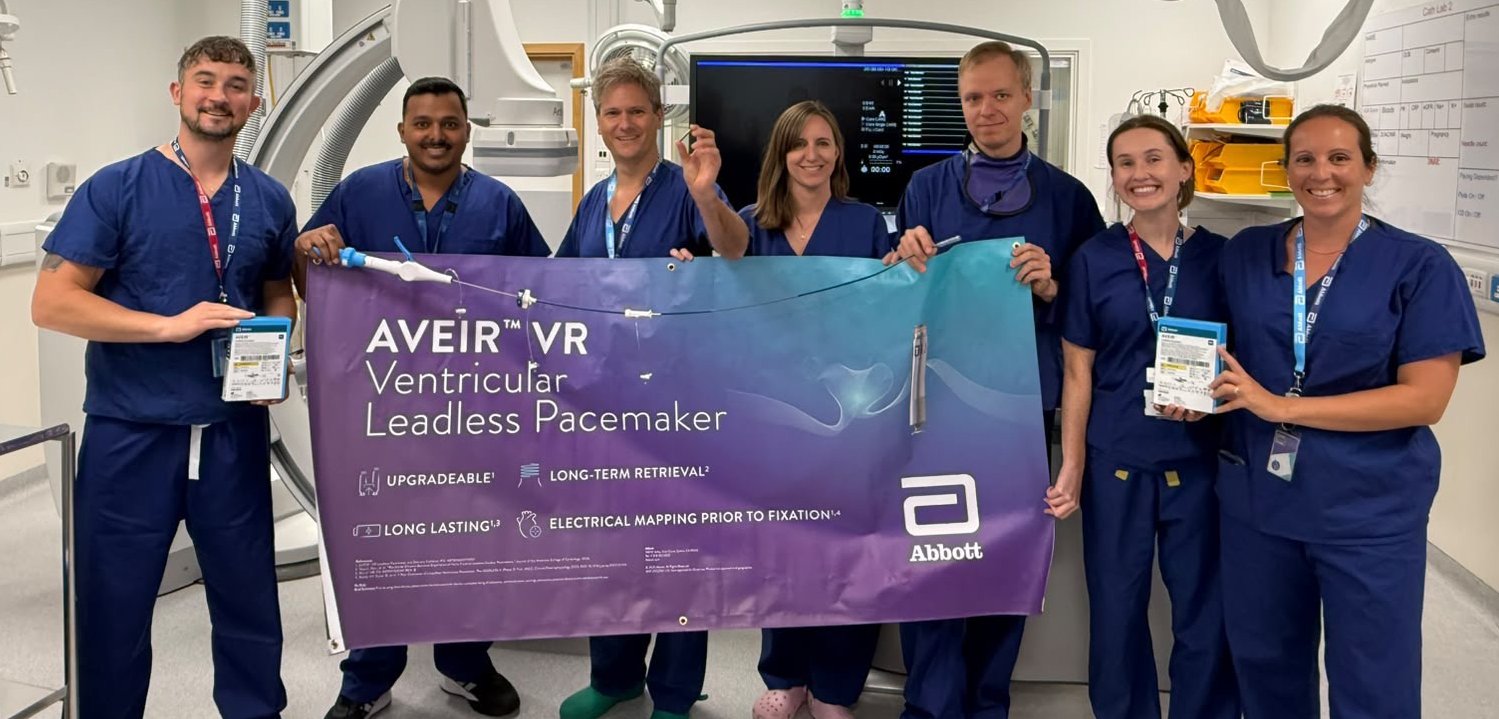
BELOW: Colleagues from Somerset NHS Foundation Trust’s cardiology team.
***
Around Wellington’s Health News is sponsored by Nuffield Health Taunton Hospital – visit their website by CLICKING HERE.